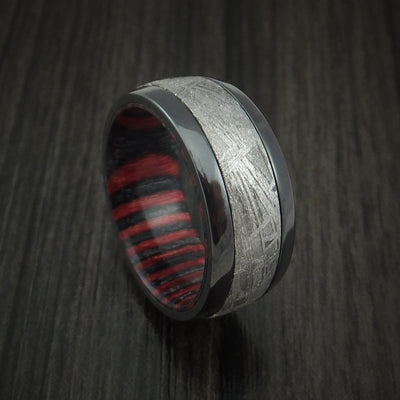
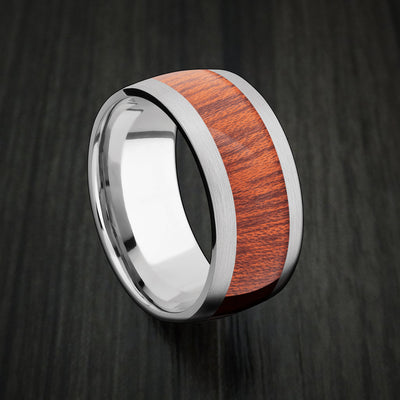
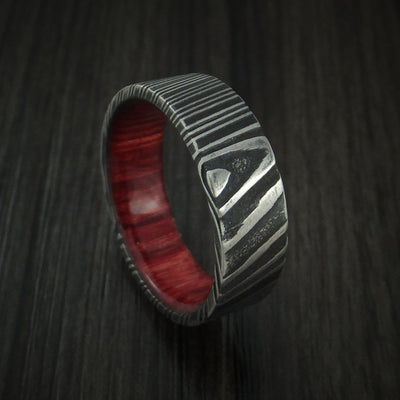
Bloodwood
A dense, vivid red hardwood from South America with a fine, straight grain and a naturally lustrous surface. One of the most saturated reds available in hardwood.
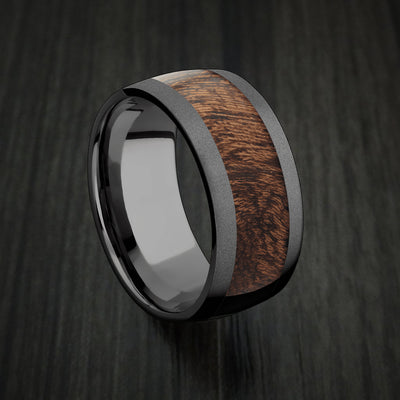
Bocote
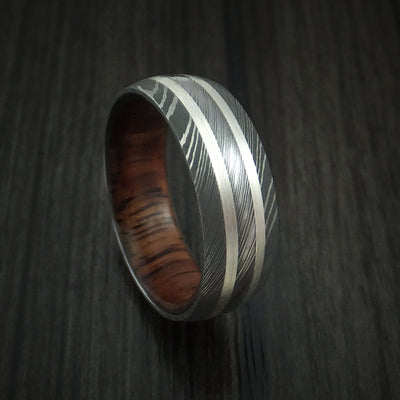
Native to Mexico. Wide range of patterns with outstanding zebra-like contrasts of nearly black strips. Color varies from golden brown to tan to golden yellow. A hardy, heavy wood.
Boxelder Burl
A burl wood from the Boxelder maple — cream to light tan with dramatic pink, red, and orange streaking from pigment-producing fungi. Every piece is uniquely patterned.
Cocobolo
Deep reddish-orange tones with irregular dark streaks and a naturally high-gloss finish when polished. Dense and richly figured — one of the most prized tropical hardwoods.
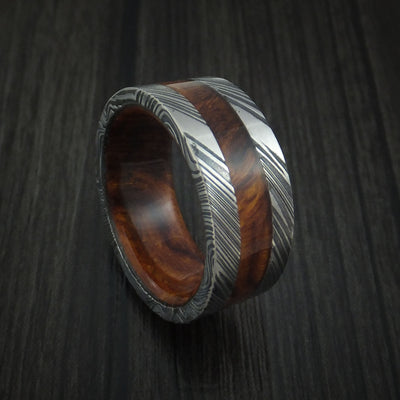
Desert Ironwood Burl
A rare tree from the Sonoran Desert in the USA and Mexico with an appealing grain pattern, good contrast, and excellent figuring. So dense it actually sinks in water.
Ebony
One of the densest and darkest woods in the world — deep black to dark brown with almost no visible grain. Exceptionally smooth when polished, striking against lighter metals.
Koa
From the Hawaiian islands. Normally a medium to red-brown with contrasting dark streaks. Traditionally used to make canoes, surfboards, and instruments like ukuleles and guitars.
Leopard Wood
A very dense, hard wood from Central and South America with a unique spotted pattern resembling a leopard's markings. Color varies from brown to red-brown with spots of light brown to grey.
Madagascar Rose Wood
A richly colored tropical hardwood with reddish-brown tones, dark grain lines, and a lustrous surface. One of the most visually complex rosewood varieties available.
Maple Burl
From the USA — a rare growth on a common tree. Varies from honey brown to medium brown with unusual tight grain swirls. Once polished it has a subtle, beautiful sheen.
Natural Oak
Classic American Oak in its natural, unstained form — warm tan tones with a pronounced open grain. Clean, familiar, and versatile against any metal finish.
Olive Wood
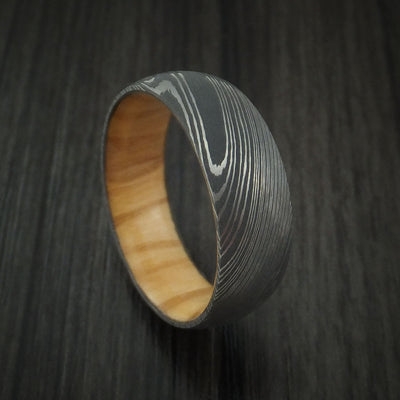
Native to Europe, Africa, and the Middle East. Tan with black, gray, and brown streaks that deepen over time. Holds traditional significance across many cultures and religions.
Osage Orange
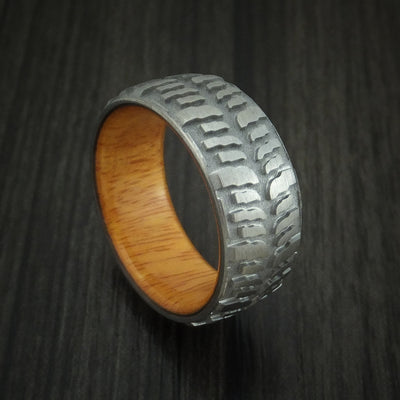
Originated in Argentina but planted across the US plain states in the 1930s. A dense, very hard wood with a distinctive bright yellow to warm orange color.
Padauk
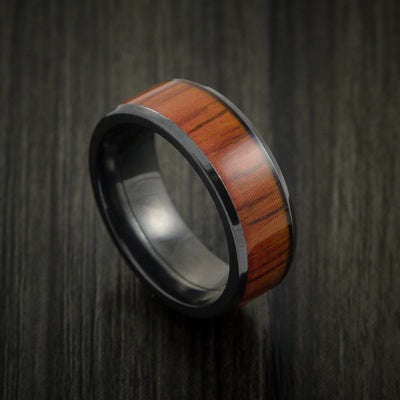
From Africa, historically used in herbal medicine. Color ranges from bright orange to deep orange-red, fading over time to a warm, slightly red-brown.
Pernambuco
A dense Brazilian hardwood with a golden-orange to reddish-brown tone. Traditionally the wood of choice for fine violin bows — prized for its elasticity and beautiful figure.
Purple Heart
A hard, heavy wood from Central and South America with a unique purple color and grain ranging from straight to wavy to interlocking. Darkens to brown with a hint of purple over time.
Pyinmaburl
A richly figured burl wood from Southeast Asia with warm reddish-brown tones and intricate swirling grain patterns — one of the rarest woods in our collection.
Red Heart
From Honduras — a bright red hardwood ranging from lighter pink-red to darker brown-red. Fades gracefully to a richer, more reddish-brown color over time.
Sapele
An African hardwood related to mahogany with a deep reddish-brown tone and a distinctive interlocked grain that produces a ribbon-stripe figure when quartersawn.
Sequoia
Sourced from the American West — warm reddish-brown with a straight, fine grain. Lightweight for its association with the world's largest trees, and richly toned.
Snakewood
An extremely dense wood from South America — reddish-brown with irregular black markings resembling snakeskin. Challenging to work, but truly one of a kind in appearance.
Spalted Tamarind
A pale yellow wood with dramatic black spalt lines from the Tamarind tree in Africa — the same tree celebrated for its sweet/sour fruit pods.
Teak
Native to Southern Asia and grown across tropical Africa and Latin America. Ranges from golden to medium brown with a straight grain that deepens as the wood ages.
Thuya Burl
From Morocco, Algeria, Tunisia, and Spain — harvested from knot clusters on the roots of the Thuya tree. Orange to red-brown with many tightly arranged "eyes." The tree can regenerate itself after wildfire.
Walnut Wood
Native to Southwest Asia and now grown across the USA and England. Generally straight grain but can be irregular. Colors range from light pale brown to dark chocolate with dark streaks.
Wenge
From Africa — dark brown with distinctive near-black streaking in the grain. Unique coloring, pattern, and hardness make it ideal for high-end furniture and musical instruments including drums.
Whiskey Barrel Wood
Made from American White Oak barrels used to age whiskey — repurposed into rings that carry the warm amber tones and subtle char of years spent aging bourbon. Each piece holds a story.
Zebrawood
Native to Western Africa — light brown sapwood with bold dark brown to black grain lines that produce a striking striped appearance.
Ziricote
Native to Belize, Guatemala, and Mexico — a hard, dense wood in reddish brown to dark brown with distinct black streaks. Commonly used for knife handles and fine furniture.
 Custom Ring Design Tool
 Signet Ring Design Tool
 Engagement Ring Design Tool
 Anniversary Ring Design Tool
 Classic Gold Ring Design Tool
 Collegiate Ring Design Tool
 Damascus Steel
 Tantalum
 Meteorite
 Carbon Fiber
 Wood
Wood
 Dinosaur Bone
 Black Titanium
 Diamond and Gemstone
 Superconductor
 Kuro-Ti
 Solid Gold Rings
 View All Materials