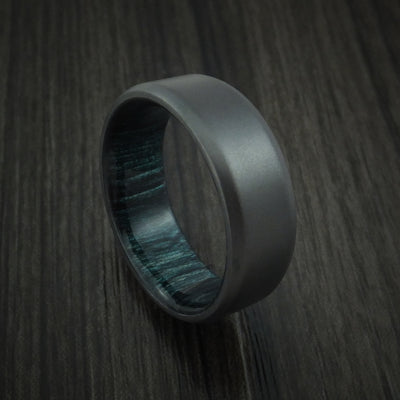
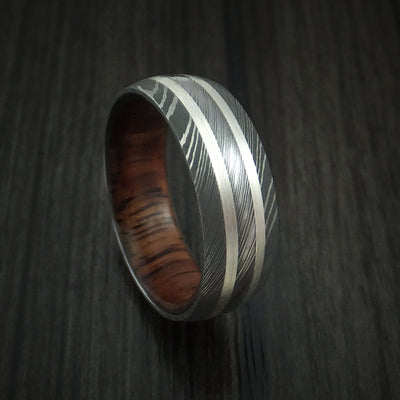
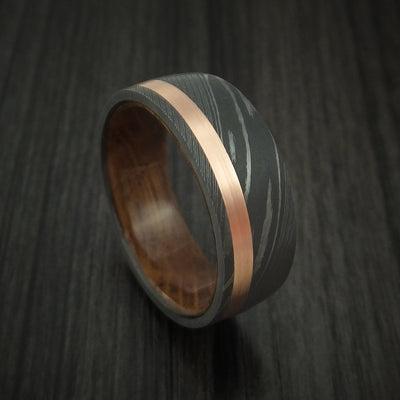
Bocote
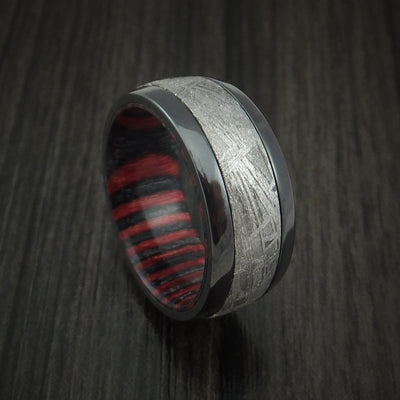
Bocote is native to Mexico. It can have a wide range of patterns with outstanding, zebra-like contrasts of nearly black strips. The color varies from golden brown to tan to a golden yellow. It is a hardy, heavy wood.
Desert Ironwood Burl
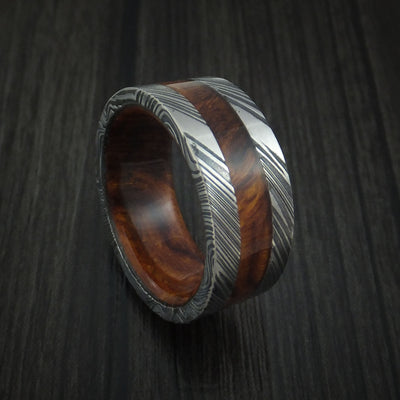
Desert Ironwood is a rare tree that grows in the Sonoran Desert in the USA and Mexico. It has an appealing grain pattern with good contrast and figuring. So dense it actually sinks in water.
Jack Daniel's Barrel Wood
This wood comes from the whiskey barrels Jack Daniel's uses to age their whiskey. The barrels are handmade from American White Oak and used only once before being repurposed — including in our rings.
Koa Wood
Koa comes from a flowering tree on the Hawaiian islands. It is normally a medium to red-brown with contrasting dark streaks. Traditionally used to make canoes, surfboards, and instruments like ukuleles and guitars.
Leopard Wood
Leopard Wood is a very dense, hard wood from Central and South America. It has a unique spotted pattern resembling a leopard's markings. Color varies from brown to red-brown with spots of light brown to grey.
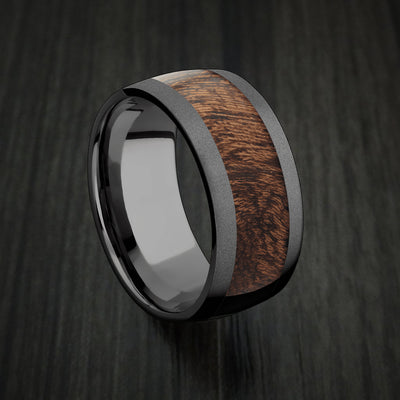
Maple Burl
Maple Burl comes from the USA — a rare growth on a common tree. It varies from honey brown to medium brown and features an unusual pattern of tight grain swirls. Once polished, it has a slight sheen.
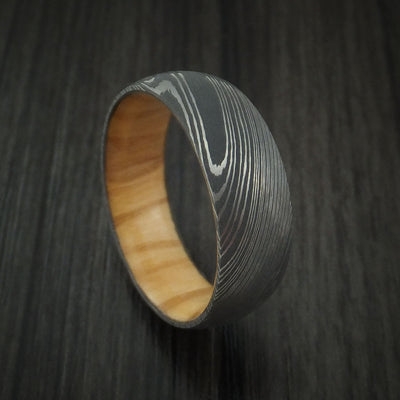
Olive Wood
Olive wood is native to Europe, Africa, and the Middle East. It has a tan color with black, gray, and brown streaks that darken and become more attractive over time. It holds traditional significance across several cultures and religions.
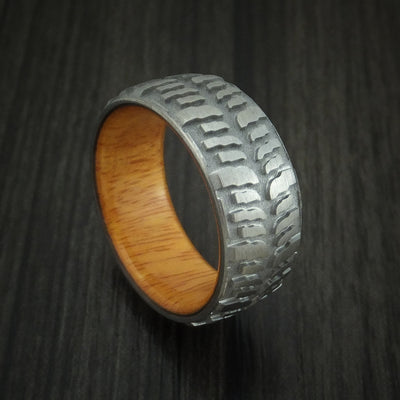
Osage Orange Wood
Osage Orange originated in Argentina but was planted across the plain states of the USA in the 1930s. It is a dense, very hard wood with a distinctive yellow-orange color.
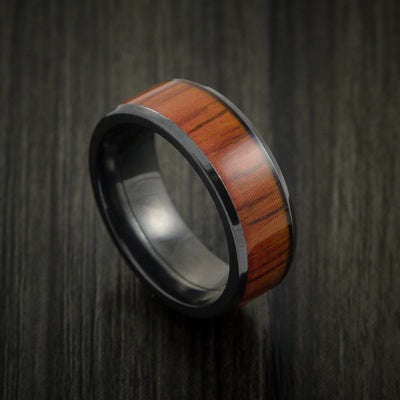
Padauk Wood
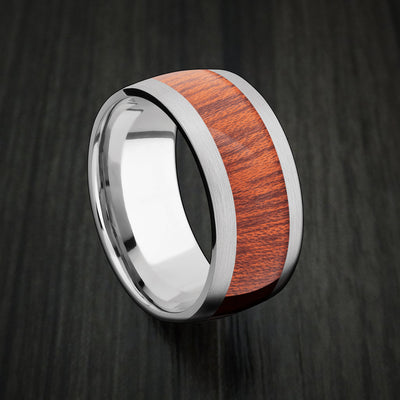
Padauk comes from Africa and was historically used as herbal medicine. The color ranges from bright orange to deep orange-red, fading over time to a warm, slightly red-brown.
Purple Heart
Purple Heart is a hard, heavy wood from Central and South America with a unique purple color and grains that vary from straight to wavy to interlocking. It can darken to brown with a hint of purple over time.
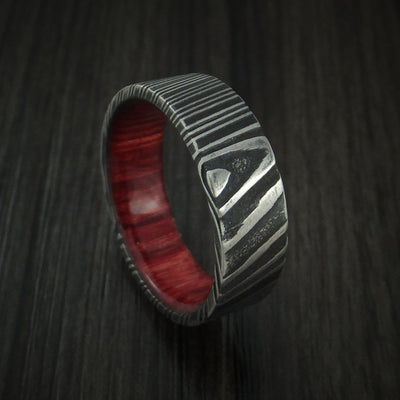
Red Heart
Red Heart comes from Honduras and is a bright red hardwood ranging from lighter pink-red to darker brown-red. Over time, the wood fades to a richer, more reddish-brown color.
Snakewood
Snakewood is an extremely dense wood from South America that can be challenging to work with. Its unique reddish-brown color with irregular black markings makes it truly one of a kind.
Spalted Tamarind
Spalted Tamarind is a pale-yellow wood with black streaks throughout. It comes from the Tamarind tree in Africa, known for its sweet/sour fruit pods.
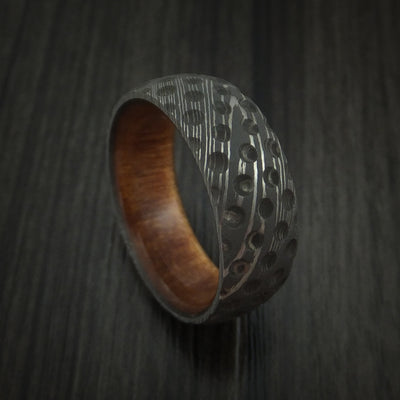
Teak
Teak is native to Southern Asia and is also grown in tropical regions of Africa and Latin America. It ranges from golden to medium brown with a slightly darker grain that can deepen as the wood ages.
Thuya Burl
Thuya Burl ranges from orange to red-brown and typically includes many tightly arranged "eyes." It comes from Morocco, Algeria, Tunisia, and Spain from knot clusters on the roots of the Thuya tree — a small tree that can regrow itself after a wildfire.
Walnut
Walnut is native to Southwest Asia and now commonly grown in the USA, England, and beyond. The grain is generally straight but can be irregular. Colors range from light pale brown to dark chocolate brown with dark streaks.
Wenge Wood
Wenge comes from Africa and features a dark brown color with distinctive black streaks. Its unique coloring, pattern, and hardness make it ideal for furniture and high-end musical instruments including drums.
Zebrawood
Zebrawood is a hardwood native to Western Africa. Its zebra-like appearance comes from the light brown sapwood paired with contrasting dark brown/black grain.
Ziricote
Ziricote is native to Belize, Guatemala, and Mexico. It is a hard, dense wood with colors ranging from reddish brown to dark brown with distinct black streaks. Commonly used for knife handles and furniture.
 Custom Ring Design Tool
 Signet Ring Design Tool
 Engagement Ring Design Tool
 Anniversary Ring Design Tool
 Classic Gold Ring Design Tool
 Collegiate Ring Design Tool
 Damascus Steel
 Tantalum
 Meteorite
 Carbon Fiber
 Wood
Wood
 Dinosaur Bone
 Black Titanium
 Diamond and Gemstone
 Superconductor
 Kuro-Ti
 Solid Gold Rings
 View All Materials